Word of mouth marketing is a way of sharing information from person to person through verbal communication. Businesses have been using this strategy to influence their customers to spread positive words about their product, encourage and reach wider audience to purchase their products.
There are six principles of why people talk about the message and decide to spread the information. Known as principles of contagiousness it is abbreviated as STEPPS.
The first one is social currency. For people to talk, the message should give ‘social currency’ or ‘bragging rights’. Jonah Berger pointed out three ways to make people look good by sharing their brand.
A. Showing remarkability
When a brand capable to make innovation that is novel, interesting or worthy of attention, that product is remarkable. For example, Trunk Club provides service for people who hate shopping and have difficulties to pick up clothes by personally hand-picked clothes that match their unique personality and needs. Customers will only need to pay for what they like when they need it. Customers will be eager to share about the brand on social media. They feel remarkable by talking about it and give social currency.

B. Leveraging game mechanics
Game mechanics can motivate customers to build sense of achievements. By providing levels, scores etc., customers will engage until they reach certain levels and compete with others to perform better. Doing well makes them good and they will share their progress on social media. Starbucks provide rewards by giving stars for customers who purchase their drinks using Starbucks cards. Starting from Welcome level, they need to collect stars to upgrade into Green and Gold levels. Each level provides more benefits than the previous levels. This evokes customers desire to drink more to gain more starts and get to the new level with more benefits.

C. Make people feel like insider
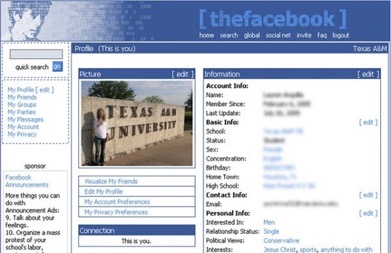
People desire things more when these are hard to find. Exclusivity works hand in hand with scarce where only some people have the authority to gain access to it. It is social currency where the privileged people wants to share on social media and the brand becomes well-known and wanted. When Facebook was initially launched, it was only accessible for Harvard students. More than half of Harvard undergraduates were Facebook users in first month. Facebook gained huge exposure as other students have to wait for Facebook to be available on their school.
The second principle is triggers. Brand must be associated with the trigger that customers encounter frequently where customers will remember and recall it at the top of their mind. Eventually, it will stimulate customers behavior to talk more about the brand. Nike’s slogan “Just Do It” was intended for everyone, not just sports enthusiasts. The slogan encouraged people to have can-do attitude and strive for determination and passion.
The third principle is emotions. The message that the brand communicates will be able to arouse whether positive or negative emotions. Accordingly, customers will act based on the response. Customers will share it on social media and do impulse purchasing of the product. Moreover, it will establish loyal customer and provide new experience. Always launched #LikeAGirl campaign to portray all of amazing girls and women are doing in sports and the world. The campaign captured a lot of hearts and possible customers.

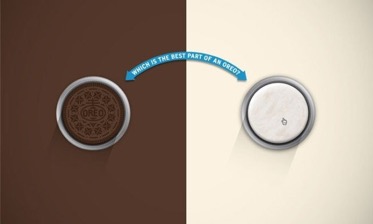
The fourth principle is public. People tend to follow others because they influence to behave on the same way as they do. It creates a belief when people consume it, it must be really good. Oreo launched two months campaign called Cookie vs Creme. Fans were asked to vote on their favorite sides. The campaign accumulated 53.000 Instagram followers within days. It worked because fans could vote publicly and their peers would know and they would tell their friends and will spread through word of mouth.
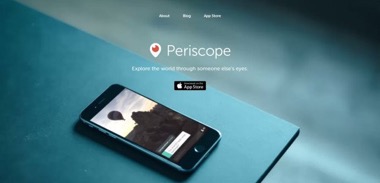
The fifth principle is practical value. People like to have valuable practical information before they make decisions and share it to help others who might get benefit from it. Periscope allows people to watch a live-stream of important occasions that happen in real time everywhere. Periscope brings value to utilize their platform for something greater and captivate wide range of behaviors.
The last principle is stories. Stories are useful to share powerful messages that can be useful for life advice or tips. Brand must be able to envelop the message through riveting narratives to capture its audience. Sarah and Paige were born with only one arm. Their similar conditions were the common thing that brought them together and created a special bond. Despite that, they had never met in person. The story gained Skype’s attention and they offered the chance for the two girls to meet in real life.
Social media influencers help brands to communicate the message to the target audience. There are three types of social media influencers that contributed to the success of social epidemic.
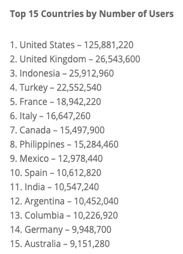
The first one is connectors. Connectors is a social glue who spread the message. People that connect on social media are linked to very small number of people and the rest are linked to the world through this few. Facebook connects 500 million users around the world. To celebrate this milestone, Facebook launched Facebook Stories to capture people stories on how Facebook bring impact on their lives.
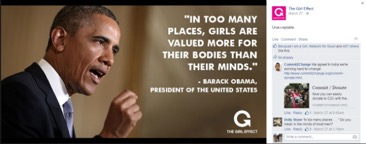
The second one is mavens. Mavens are trustworthy source that collect and distribute information to help customers find the things that they want. The Girl Effect gather information for their followers and stimulate conversation. They encourage them to voice out their opinions just like what they do on daily basis. They advocate about how we must set an example where we need to get vocal about our cause if we want our followers to engage with your cause.
The last one is salespersons. Salespersons are persuaders who motivates us to take actions. Jack Kosakowski from Act-On is a social selling advocate and social selling animal. According to him, social selling allows to leverage the sales and marketing data to create buyer experience which will be able to generate conversations. Conversations with buyers enable us to obtain the value and which is important for them. Consequently, customers get to enjoy the experience which eventually generate more opportunities and revenue to the brand.
To conclude, brand must identify the message that they want to communicate and how it persuades customers to purchase their products. Brand should adopt the six principles of contagiousness to help them implement this strategy. Moreover, brand should select the social media influencers to deliver the message towards their audience.
It is important for brand to speak the message consistently and advocate opinions from the customers. Therefore, I would also like to encourage you to speak up and throw out some opinions, feedbacks or anything regarding to this post. I promise to give you the best answer and clarify any misunderstanding or doubts. Thank you. See you on the next post.
 Sarah Erfina's Blog
I agree with the point that the brand must create a message that able to capture the audience. The six principles of contagiousness are very effective to incorporate in this strategy
LikeLike
I am happy that you agree to the theory. Brand must communicate the message by following this principles to help them reach wider audience that spreads the positive words about the brand and do impulse purchasing of their products.
LikeLike
One thing that I do enjoy is the game mechanics present in businesses. It makes you feel like you belong in a community and it incites competitiveness between people making them wanting to engage with the brand even more. For example, getting the micro-credentials in RMIT courses tend to be more fun as it feels less like studying and more like playing a game and you get an actual badge in the end!
LikeLike
I am glad that you able to experience this strategy in real life. Leveraging game mechanics open more opportunities for the brand to persuade customers to engage more and compete with others to achieve higher level and earn higher social standing. When you mention the micro-credentials, I never thought about it as a competition to get a badge and relate to the game mechanics. I want to say thank you for broadening my knowledge into this strategy and help me learn and try to incorporate it in real life just as you do.
LikeLike
Great article. This article expands my knowledge of why ideas are spread. I would definitely recommend this article to start-up companies that are looking to expand by the marketing strategy stated above which is “Word of mouth marketing”.
LikeLike
Wow, I am so glad that you want to recommend this article to start-up companies. Honestly, I did not expect for any person to react to my article in this way because I just made this article based on my knowledge and insight that I gathered so it is far from perfect. The fact that you acknowledge my analysis and interested in my article makes me feel satisfied with my effort. I could not ask for anything better. Thank you Ivory for the positive feedback.
LikeLike
Very interesting take on marketing. Brand image is certainly important in dynamic and growing markets. Its one of the most important factors that keeps a company/product at the top of its market and keeps customer loyalty going. Which of those six principles, or “STEPPS” as you put it, do you think a brand, in a market as dynamic as the food and beverages, has to mainly focus on?
LikeLike
Yes, it is important for the brand to communicate their message consistently to build good brand image, awareness to reach more target market and establish good reputation. To answer your question, as far as each of the principles is important and complement each other, I think we should identify the brand strategy and goals that they want to achieve. Then, the brand can incorporate any of the STEPPS accordingly. I hope i can clarify your doubts enough. Feel free to voice out your opinions if you disagree with my statements. Thank you for asking this important questions.
LikeLike
Good read! I agree with you that word of mouth marketing is good for a brand and can help it in terms of its’ branding. As a consumer myself, I feel word of mouth marketing more reputable also as it is more genuine since it is a user-generated content!!
LikeLike
Yes, word of mouth is an effective tool to incorporate into business strategy to help reach wider audience and influence people towards purchasing their products. It is made by the customer who already experienced the product itself so it is more trustworthy as a testimony to other people who haven’t tried it which can establish loyal customer and bring good reputation for the brand.
LikeLike
Hey Jessica, thank you for your blog, I find it very informative. I really could use some of these for my startup. Anyway, what do you think would be the best approach for me to create viral moments for my business?
LikeLike
Hi Aveline, thank you for your question. First, i would like to verify that my name is Sarah not Jessica but i still appreciate your feedback. To answer your question, i believe that you can follow the principle of contagiousness known as STEPPS to help you establish your start-up and build a good reputation and prospect in the future. One of the things that you can implement is creating innovative product that has not been existed in the market lately hence customer want to try and use your product. This is just an advice from non-expert person and you can explore more information in the meantime from major successful brands in the world online.
LikeLiked by 1 person