Kaplan defines mobile marketing as “any marketing activity conducted through a ubiquitous network which consumers are constantly connected using a personal mobile device”.
Mobile marketing provides customers with several features such as:
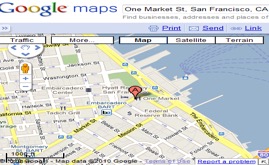
- Location search = Customers will be able to use mobile on the way. For example, Google Maps allow customers to find location that they want and give directions to the location.
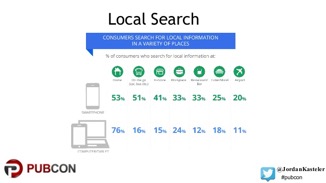
- More local intent = Customers are capable to deploy mobile to find things nearby. Survey has proven that most people use smartphone to search for local information in a variety of places.
- Time sensitive = Mobile allows customers to discover things at once. FedEx launched an interactive advertising campaign that shows the time customers have to get their packages until Christmas. FedEx put GPS on their location listing to ease customers on finding the nearest store that includes contact information, address and click-to-call feature.
- Voice search = Siri is one of voice-based interfaces that enable voice-based search. Siri will listen to customers and send the request to Apple’s servers for translation. Apple will take the request and fulfill it.

- The device – capabilities = Mobile device has many capabilities that brands can utilize to promote their brands to customers. IKEA created a mobile app that allow customers to scan it with the pages to identify additional features such as putting certain products in your room by deploying input from the camera.

Mobile Marketing Applications
There are 2 elements to distinguish between 4 types of mobile marketing applications:
- The degree of consumer knowledge: Companies will be able to customize their messages to each user
- The trigger of communication: Push communication that commenced by company and pull communication that commenced by customer.

The first group is low knowledge/push, companies communicate messages to huge amounts of mobile users. It is categorised as strangers considering the lack of firm’s recognition on which customers receive their message. The second group is low knowledge/pull, customers desire to receive information but wish not to reveal themselves. Company would not even know the clients that they are going to deal with, which also known as groupies.
The third group is high knowledge/push, companies recognize their customers and authorize to give information without consent, refers as victims. The last group is high knowledge/pull, customers willingly give consent to be contacted and provide personal information, refers as patrons.
Mobile Media Applications
Similar to mobile marketing, there are four types of social media applications, depends on whether the message delivers on specific location (location-sensitivity) and whether it is received instantly or with a delay (time-sensitivity).

1. Slow-timers
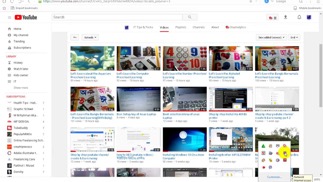
These group are not sensitive to time and space. It does not matter where consumers are or when the content is created. YouTube provides user-generated content where people can watch videos wherever they are anytime they want.
2. Space-timers
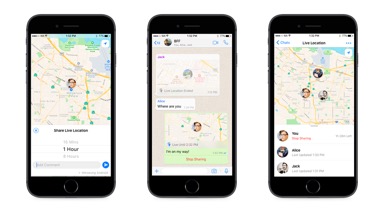
For people that belong to this group, location and time matters or important to them. WhatsApp launched Live Location feature where the users can share their location in real time with people from their contact list. It will be end-to-end encrypted along with timer to perform security function where users either terminate the location sharing or let the timer expire.
3. Quick-timers
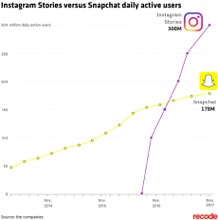
People on this group are only concern about time. Instagram gives an update on their Instagram Stories feature where users will be able to upload any video or picture from their library more than 24 hours limit. Since Stories launched in 2016, it has beaten Snapchat by accumulating 200 million daily users as of September 2017.
4. Space-locators
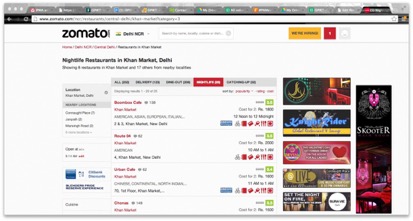
Members of this group are only value the importance of location. Zomato established as a food delivery start-up that provides user-reviews of restaurants, ratings, menus and food delivery options from partner restaurants in chosen cities. The reviews will give information about the ambience location, service, recommended dishes with photos as evidence. Customers can apply filter such as Wi-Fi, outdoor seating and buffet to ease the process to find the preferred place.
Successful Applications
Some of major brands that have been successful in creating mobile applications are:
1. Starbucks
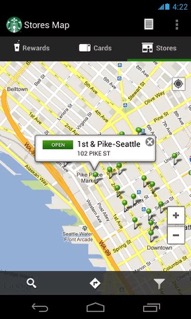
Starbucks is the trend setter of mobile marketing. Their most popular feature would be store locator to help customers find nearest store based on their location. The app also enables customers to receive discounts and make payments. Customers can also customize their own drink and order them at the same time.
2. Nike
Nike released Nike+ App that help users to plan, assess and follow their running routines. When the user runs, the app will gauge their running speed, distance coverage, calorie burn etc.


Mobile Social Media Advice
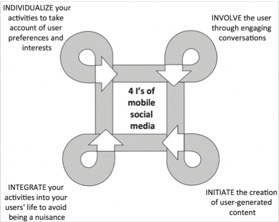
Firm should be able to deploy social media effectively and entertain customers in the society with the following advices:
1. INTEGRATE your activities into users’ life to avoid being a nuisance
Firms should use social media to communicate with customers. If customers download your application, it can be seen as a sign of trust or customers willingness to establish friendship with your brand.
2. INDIVIDUALIZE your activities to take into account of user preferences and interests
Mobile device must be personal not shared. Company are capable to have personalized communication with customers.
3. INVOLVE the user through engaging conversations
The real-time response and geo-localization allow firms to increase the engaging conversations with current and prospective customers. Company may leverage on games to create a collaborative experience with company, user and their social network.
4. INITIATE the creation of user-generated content
The effective strategy will not be completed without incorporating word of mouth communication with customers. Word of mouth marketing is truly a powerful campaign that contributes to company success.
Mobile marketing and mobile social media applications are very important for firms to incorporate in their business strategy. Firms will be able to persuade customers to use their products and services which provides two way benefits for firms and customers. Firms should learn from successful brands capabilities to utilize mobile applications effectively and pay attention to 4 I’s of social media to create successful mobile applications.
Now I want to turn it over to you. What do you think of the impact of mobile marketing for the business? Do you think there will be more people use social media to engage relationship with the brand and continue to invest their products and services? Let me know what you think in the comment section below. Thank you for reading and have a nice day.
 Sarah Erfina's Blog
One type of mobile marketing that has become a popular type of application is Mobile Payments. In Singapore, one of the largest media is DBS Paylah! Where you scan the barcode and we can pay or send money instantly, other applications include GrabPay. In Indonesia, many mobile payment apps or popularly called FinTechs are Gopay from Gojek, Grabpay, OVO, and Dana that has many different types of marketing strategies to make people use their products. This is an amazing opportunities for many companies however, it must be noted that the infrastructure a.k.a the availability of internet must be strong or these apps won’t flourish in those countries.
LikeLike
As technology develops time to time, it is easier for companies to create business strategy by using these advanced technology. Mobile marketing is one of the tools that proven to be effective in helping the companies promote their brands to target customer and stimulate their desire to consume their product. They also provide a wide range payments to help them find ease on purchasing these products. I support your intention therefore companies should improve their IT and communication systems to help them operate social media and other mobile application strategy successfully.
LikeLike
I honestly think mobiles have changed marketing campaigns by a huge degree. We would not have even thought of mobile marketing the way we do now, ten years ago! And the ease of collecting data on consumers, thanks to the digital age, has made marketing more consumer-focused. This is such a true-to-date article. And honestly, social media will continue to influence consumer behaviour and turn wants to needs. We never needed a mobile phone, I’d say, 20 years ago, and now? well, a smartphone is a MUST. I would say that Maslow’s hierarchy of needs is a perfectly applicable theory to this day, this is because social needs are far more important than they used to be due to how vastly socialising has developed now. From Myspace to now, with several global social media platforms.
What do you think about developing applications for marketing though? I honestly think that sometimes, applications are not necessary and social media marketing (such as through Instagram and YouTube) is far more useful. But what do you think?
LikeLike
Thanks for expressing your opinion for these particular subject, Abi. It is true that in the past, people do not feel the need of having social media. Since the world keeps changing and the time goes by, so does the rapid change of technology which influence customer behaviour to become more dependent on social media. To answer your question, I do think it is important for businesses to build their own mobile application. Nowadays, people have become lazy or might not find it convenient enough to directly visit the store itself due to long distance to reach the location and time-consuming. With mobile app, customers will be more ease to purchase the companies products while waiting for the products to be delivered on the chosen location.
LikeLike
the article has perfectly defined mobile marketing and mobile social media with relevant examples. Readers are capable to understand and relate to since the examples are commonly found in real life. I gain more knowledge and insight after reading this article. Looking forward for the next article.
LikeLike
Thank you for the positive feedback, Ferisa. As a content creator, I am very glad that readers may gain knowledge and understand my perspective on these particular subjects or topics. Hope you might find interest on the upcoming articles and looking forward for your next feedback and question.
LikeLike